

Duct Doors
Why ductwork needs a permanent service opening
Ductwork needs to be opened. Coils get cleaned, dampers get reset, fire dampers get inspected and tested on a cycle, and sensors get replaced. A duct access door makes each of those a routine job instead of a sheet metal job.
Hinged KHD and removable KCD compared
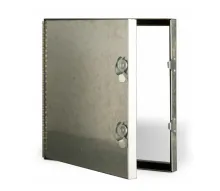
The KHD is the hinged door, furnished with hinges and a cam latch. Frames attach to the duct with notched knockover tabs, which is what makes installation quick on an existing run. It comes in eight standard sizes from 6 x 6 through 24 x 24 inches: the 6 x 6 through 12 x 12 sizes carry one stud catch and the 14 x 14 through 24 x 24 carry two.
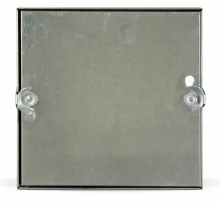
The KCD is the fully removable door with a double cam latch. Removable is the better choice where the technician needs the whole opening clear, for instance pulling a coil or reaching across the duct, and where there is no room alongside the duct for a hinged panel to swing.
Positioning, damper inspection and insulated ductwork
Three points that decide whether the door gets used properly.
- Position, because a door that opens into a joist, a hanger or a wall is a door nobody opens. Coordinate the location with the duct route and the surrounding structure, and allow clearance for the hinged panel to swing where the KHD is specified.
- Access for damper inspection, because fire and smoke dampers have to be inspected and tested periodically and the access door has to be positioned so the damper is actually reachable and visible. Plan these openings with the damper schedule, not after it.
- Insulated ductwork, because the insulation and vapour barrier have to be made good around the frame or the door becomes a condensation point.
Both models are made in the USA.